
Is Vinyl, Fiberglass, or Concrete a Better Pool Material?
You’ve probably heard that pools can be made out of several different materials and understanding the differences between them can be confusing. We’re here to break those differences down and explain what type of pool we think is the best for customers.
There are typically three options for pool materials: vinyl liner, fiberglass, or concrete. While all of them have their pros and cons, we at BGI Pools think that concrete makes the best pools because it is durable, customizable, and easy to renovate.
- Note: People sometimes call concrete pools different names like gunite or shotcrete. We use the names concrete, gunite, and shotcrete interchangeably. They refer to different methods of placing the concrete to create the shell of the pool, but they all produce a similar pool in the end.
Vinyl
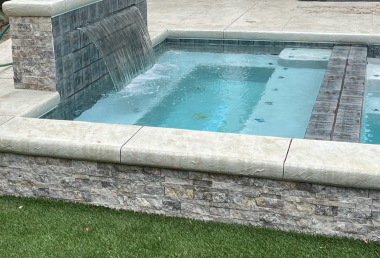
This type of pool is made by hollowing out the shape of the pool in the ground and then lining that hollow shape with plastic fabric. This method of making a backyard pool is quick to install and less expensive, but it’s not our favorite method for several reasons. For one, it is not a very durable method. We also prize customizability and vinyl is not as versatile in that way and can’t be made into as many different sizes and configurations of pool.
Our other reasons have to do with the climate of North and South Carolina. In all the work we do, Buildgreen Industries prides ourselves on building to the climate we’re in and vinyl is simply not particularly suited to the Carolinas. We have a considerable amount of groundwater, which raises the risk that the liner will become unstable and start to float. Additionally, it can feel like the sun beats down all day every day here. The UV rays from the sun, particularly in winter, will discolor the vinyl fabric and cause it to degrade.
Because of all this, a vinyl liner reaches the end of its lifespan in about ten years and then needs to be replaced. And unfortunately, you have to throw it out because vinyl liners can’t be recycled and as a company that focuses on sustainability, that’s not what we want.
In summary, while vinyl liners are less expensive, they are not our preferred pool material since they are not as durable as other options.
Fiberglass
Fiberglass pools are also quicker to install and less expensive because they come as a pre-manufactured shell. Basically, the pool shell is made in a factory and sent to you to be installed in your backyard. (You can then have water-lined tile put in if you wish, though that is less common.) But that pro creates its own con. Because fiberglass shells are pre-made, they are not very customizable; you have to choose from the shapes and sizes already available. You are additionally limited in where you can put plumbing, return lines, and lights.
While parts of a fiberglass pool are reinforced, the pools are still vulnerable to sudden ground shifting, which can put pressure on parts of the shell and cause cracks. Indeed, the shell of the average fiberglass pool is only a quarter to half an inch thick.
Over time, your pool will experience wear and tear and you’ll want to commission repairs. Another con is that fiberglass pools are difficult to repair because they cannot be drained. (This is because the fiberglass shell is not strong enough to support itself without water in the pool providing pressure.)
And the final con is that, like vinyl, fiberglass pools cannot be recycled.
In summary, while fiberglass pools are more durable than vinyl-lined pools, they still don’t achieve the level of durability that we at Buildgreen Industries shoot for.
Concrete
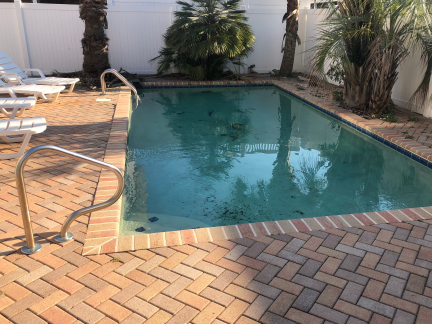
In our opinion, concrete pools are the best pool option out there. While they take longer to build and are more expensive, they make up for this in customizability, durability, and repairability. Because of all of these factors, commercial pools are only ever built from concrete.
Concrete pools are typically installed with 4000 psi shotcrete mix (a type of concrete) and reinforced with rebar. Due to the climate and geography of South Carolina, we like our concrete pools to be between 6 to 8 inches thick (though the thickness of the concrete is adjusted to site conditions) with 3/8 inch rebar. Then, on top of the concrete, we situate 6 inches of water-lined tile. Finally, we put in concrete coping around the outer edge of the pool (this coping is basically a part of the deck surrounding the pool). The pool deck sits on top of the concrete shell and is supported by the pool.
Those are the specifications, but what does it look like when the pool is being installed? The shape of the pool is dug out of the dirt then the shape of the pool is formed, plumbing is added in, and then place rebar is placed. Then, workers spray concrete over the rebar until a concrete shell is formed with three inches of concrete on either side of the rebar. The tile is then installed on top of this.
Unlike vinyl or fiberglass, concrete is almost endlessly customizable. Your pool can be formed and cast in any configuration, including free form shapes. For example, more unusual shapes like a kidney shape or oval, are possible in other types of pools, but are limited in size and dimension. Plus, you can put pool benches wherever you want and they can be any size and depth. The same principle is true for attached hot tubs, tanning ledges, pool plumbing, and water fountain features. Due to the concrete shell, your water features will be part of the pool structure and therefore don’t compromise the pool’s structural integrity. You can also customize the colors of your tile and plaster.
Also, unlike vinyl and fiberglass, you can drain the water from the pool and it is in no danger of collapse. (You do have to watch out for the risk of the concrete shell floating due to the underground water table, but it’s easy to put in a hydrostatic valve to prevent this.) Being able to drain your pool makes repairs and renovation that much easier.
In addition, vinyl and fiberglass can have some voids around their outside shells because it’s impossible to compact the dirt until it is perfectly flush with the vinyl or fiberglass, which makes them more vulnerable to ground shifting and so getting damaged—not so with concrete pools. And concrete pools don’t degrade because of UV light nor do they accumulate wear and tear very quickly. A concrete pool with water-lined tile and plaster has a lifespan of 15 to 20 years without much degradation, provided the builders followed good building practices and you follow good pool maintenance practices. Unlike vinyl and fiberglass pools, concrete pools don’t break down and have to be thrown away. At the end of its “lifespan” you don’t have to get a new pool, you can add new tile and re-plaster and it will look brand new again.
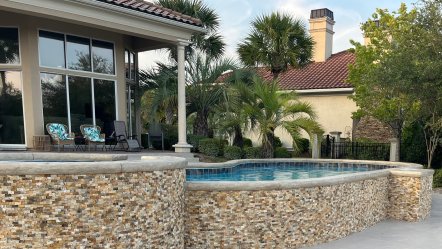
If you want a pool you can customize, that is durable, and that can be refurbished again and again, you want a concrete pool. For these reasons, Buildgreen Industries completely endorses concrete pools.
👉 Contact us today to schedule your consultation and start designing the pool you’ve always wanted.
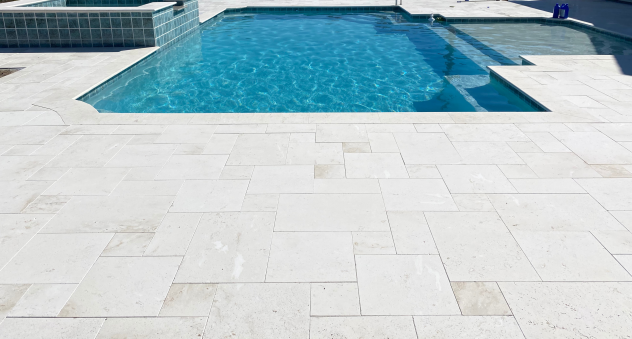
Customizable Pool Decks
Is Vinyl, Fiberglass, or Concrete a Better Pool Material?